01A pale building stone patterned with darker branching marks appears in Canadian public architecture. Tyndall Stone connects a Manitoba geological formation with quarrying, masonry and the design of prominent buildings, making a wall surface a place to read two very different timescales.
02The Château Frontenac and Banff Springs Hotel share the language of the Canadian railway hotel while responding to different settings. Parks Canada’s heritage records make their roofs, materials and views useful starting points for comparing these monumental buildings.
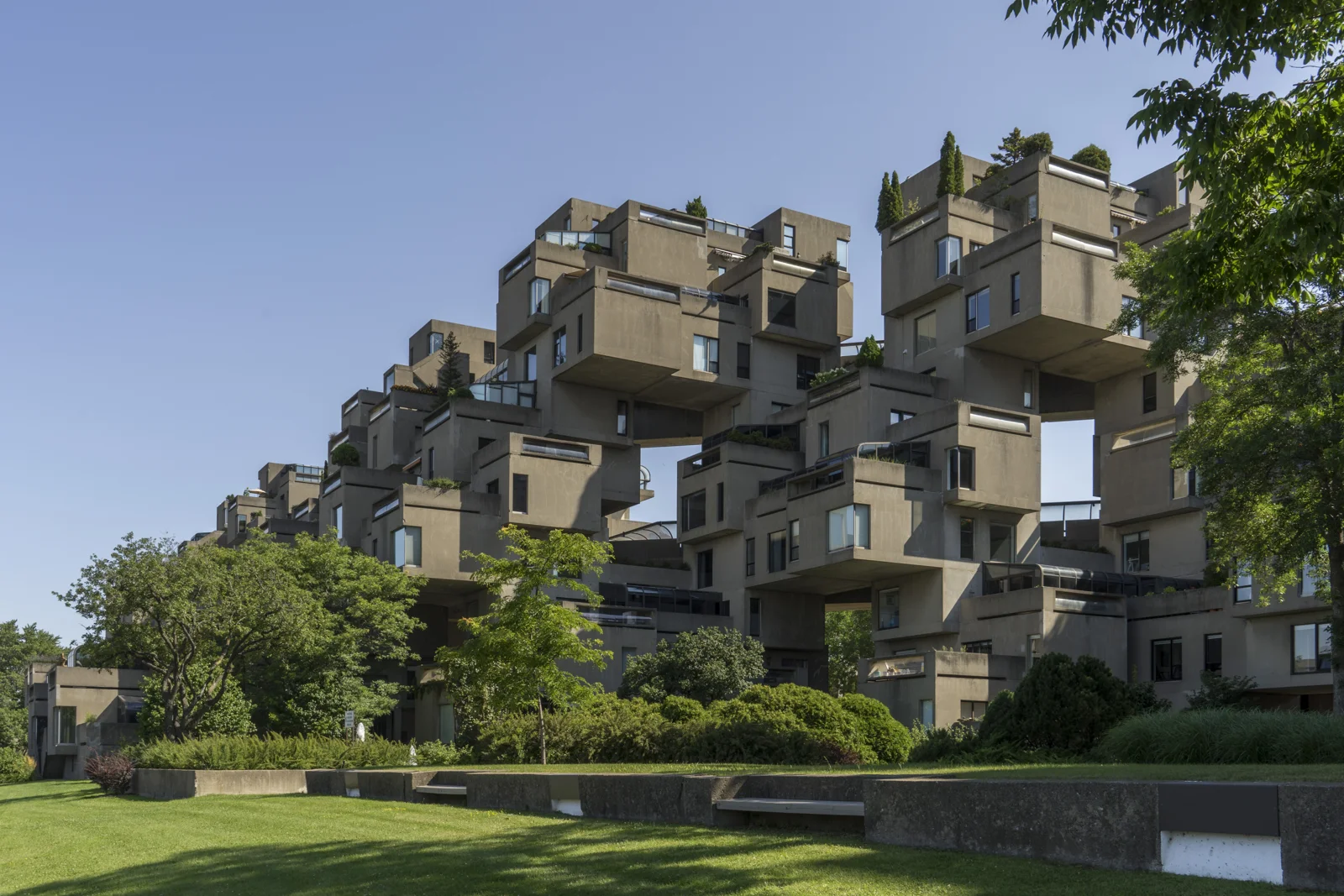
03Habitat 67 makes its repeated building units visible, but repetition was only part of the idea. The Montréal complex combined prefabricated construction with terraces and shared circulation, testing how qualities associated with a separate house might fit into denser urban housing.
04At Inglis, Manitoba, five wooden grain elevators survive together beside a railway alignment. Federal and provincial heritage records explain why the group matters as architecture, machinery and a town landscape, with differences between buildings that reward attention beyond the familiar prairie profile.